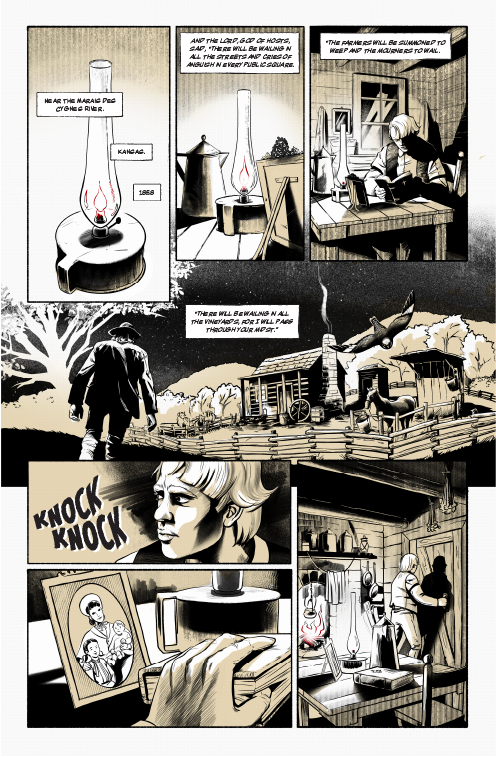
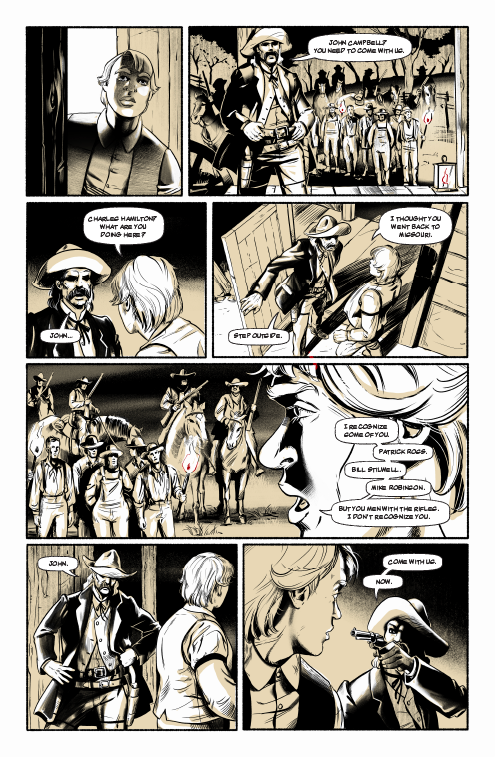
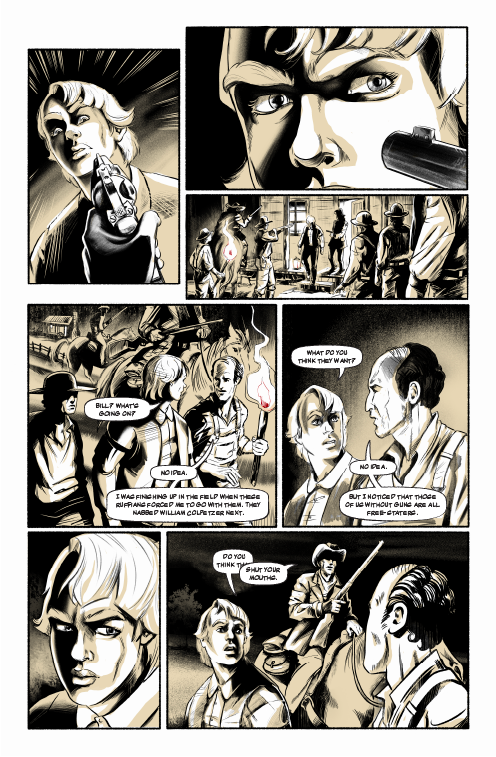
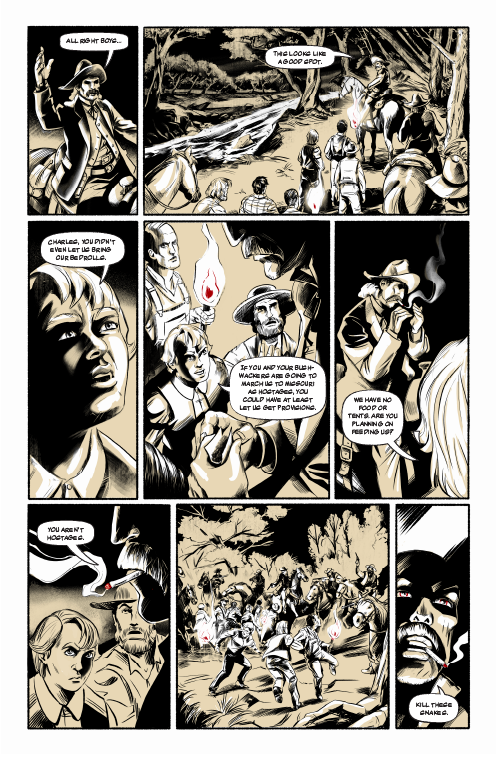
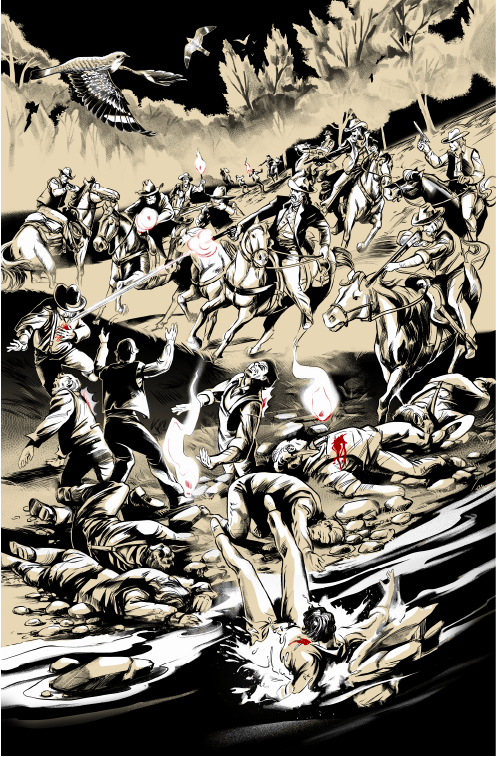
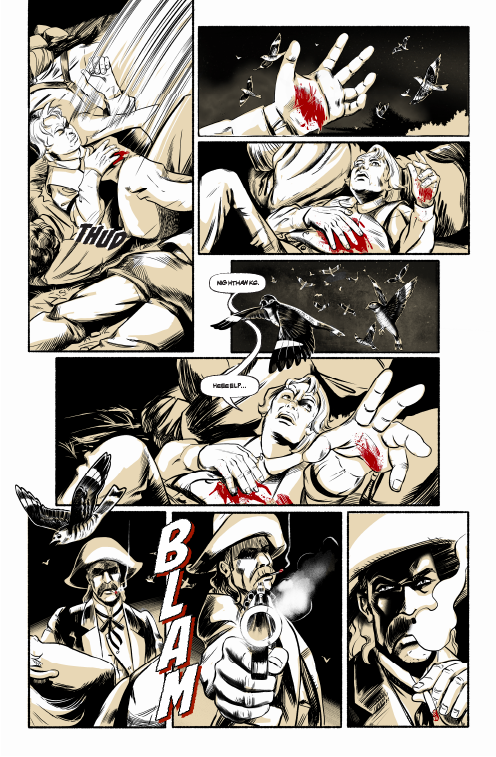
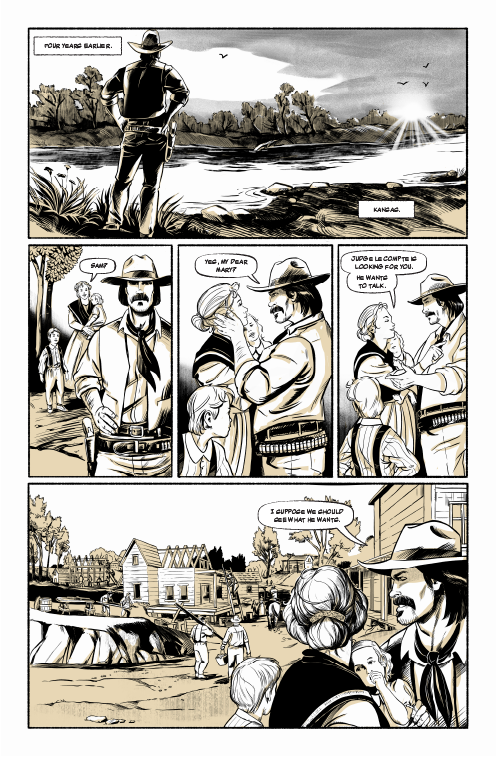
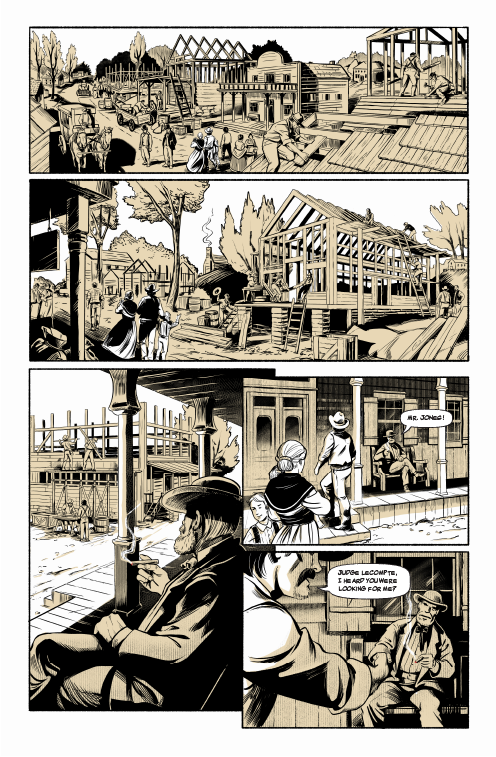
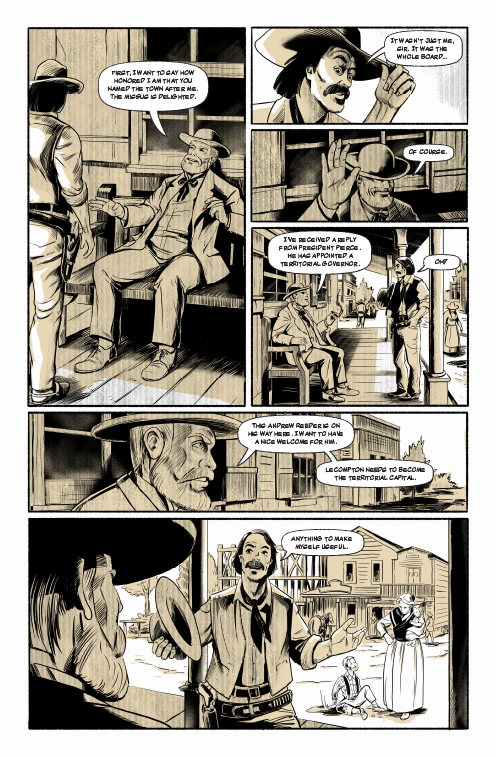
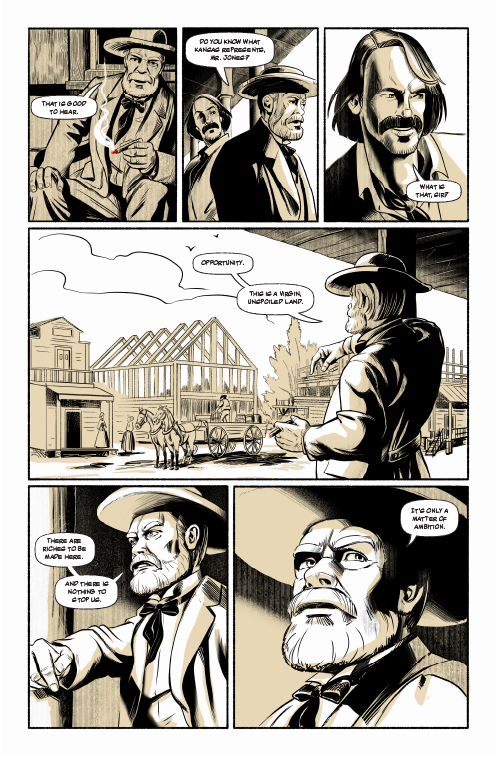
When Charles Robinson moves to the Kansas frontier to build a free state, a stolen election hands power to pro-slavery forces who make even speaking of abolition punishable by death. The violence that follows will force him to decide how far he’s willing to go for a cause he can’t legally defend.
FREE STATE is a standalone historical graphic novel of approximately 120 pages, with a completed and professionally edited script. The story is self-contained but also serves as the first in a three-part work following the characters to the Pottawatomie Massacre, when the Civil War becomes inevitable.
I am working with artist Alessandra Imperio to bring the novel to life. FREE STATE is a well researched true story that focuses on themes of civil rights, justice and truth becoming the first casualties in a conflict. This thematically rich historical thriller that is structured around a unique storytelling device. Real newspaper excerpts from the period are woven throughout the narrative, letting the historical record speak in its own voice, and forcing the reader to navigate the real life propaganda war.
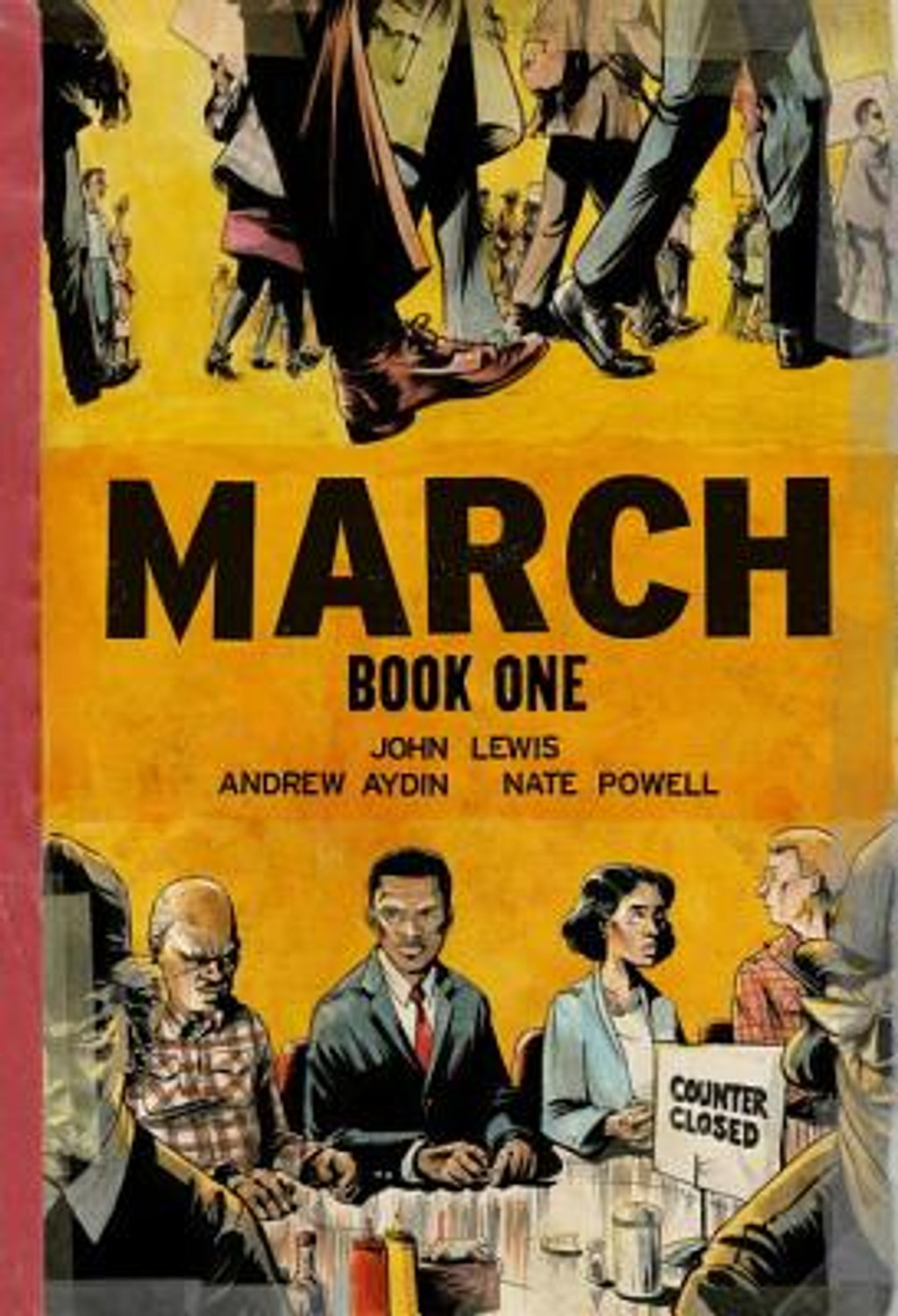
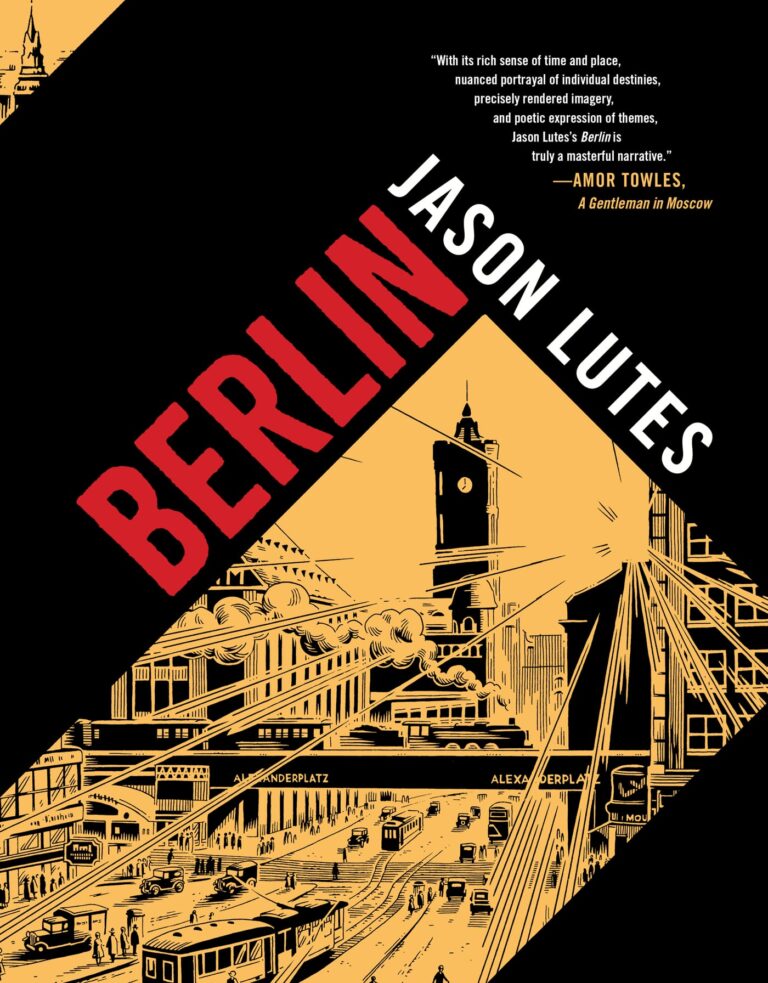
FREE STATE blends the political intrigue and resistance of ANDOR with the brutal realism of the American frontier. In the spirit of BERLIN by Jason Lutes, it uses a multi-perspective narrative to chart the slow, inevitable collapse of a society. FREE STATE is for readers of MARCH by John Lewis, Andrew Aydin, and Nate Powell, as it chronicles the limits of peaceful resistance.
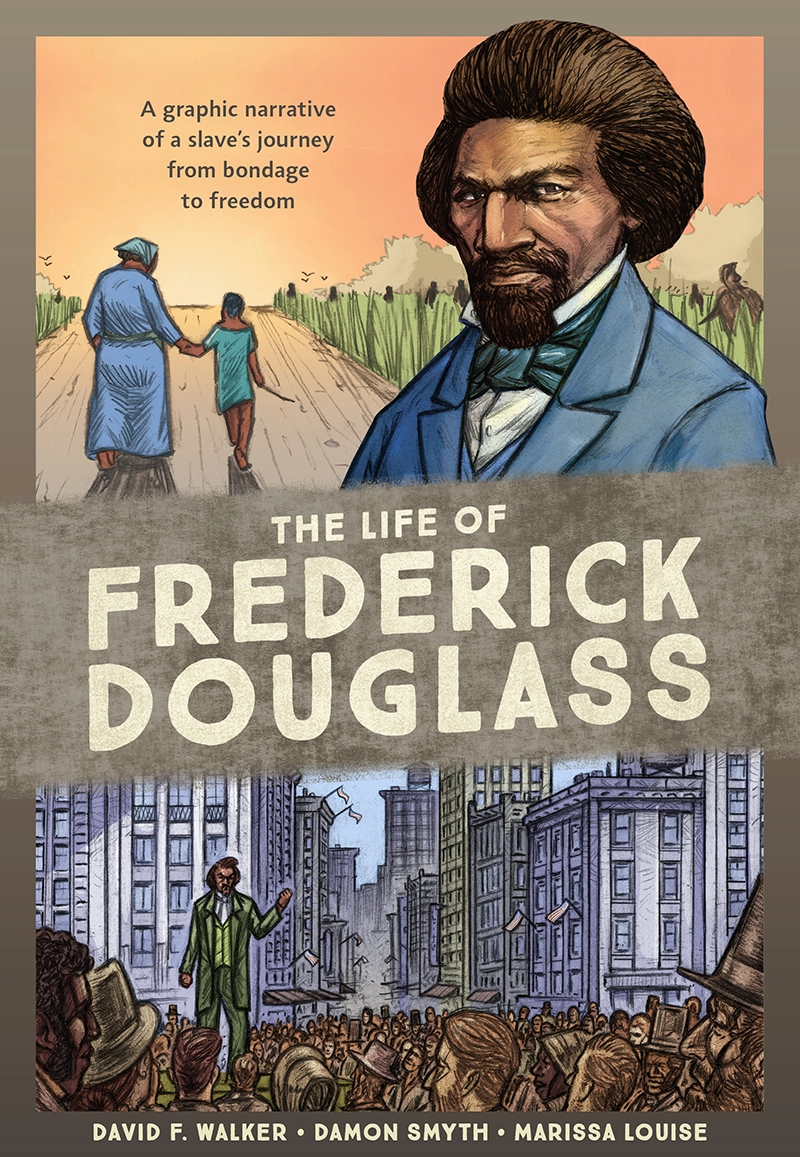
This is a completed script and has been professionally edited by Patrick Barb, formally of Ten Speed Graphic, who has worked with David F. Walker on THE LIFE OF FREDERICK DOUGLASS and Johnathan Hennessey on ALEXANDER HAMILTON: THE GRAPHIC HISTORY OF AN AMERICAN FOUNDING FATHER.
In the aftermath of a stolen election, the new government begins passing draconian laws to punish the opposition. The government, elected under the haze of fraud and intimidation, imposes measures to protect and enrich themselves, while silencing voices of dissent with threats of brutality. Merely speaking of discontent could land one in chains. Against this backdrop, the stirrings of rebellion begin to take shape as the people long for liberty.
This is Kansas. The year is 1855.
Charles Robinson has settled in the territory with hopes of creating a state free of slavery, but as a stolen legislature begins passing its unjust laws, Charles finds himself committing felonies punishable by death for simply arguing that all people deserve to be free.
When a slave girl drowns, it sets off a cycle of escalating violence that forces people to take a stand for their beliefs. Now Charles must navigate a clash of opposing ideologies and lead the abolitionists while trying to build a parallel government of resistance.
My career began at The Emporia Gazette, founded by William Allen White, which instilled in me a deep sense of how the stories we tell become the history we remember. Years later, when my daughter brought home a homework assignment on Kansas history during the pre-Civil War period, it sparked an interest in a story should have never been forgotten. What started as a simple question – “Was John Brown a hero or terrorist?” – turned into a deep dive through history books, and eventually primary sources about people like Jim Lane, Charles Robinson, and his wife, Sara.
FREE STATE tells the story of how a civil war starts, not with armies or secession, but with the gradual break down of law and order and people feeling left out of the democratic process. It explores how neighbors with differing political beliefs begin to see each other as an enemy. It is about what happens when peaceful resistance fails and if the cost of violence is worth the cause of liberty. This forgotten part of American history is more relevant now than ever.
A graphic novel is the perfect medium to make this complex and underrepresented time period accessible, especially for students. Most history teachers already use graphic novels to teach difficult subjects, and through an informal online poll, I found many teachers were excited by the idea of a pre-Civil War graphic novel featuring John Brown. The lead up to the Civil War is a pivotal time period that is sorely underrepresented and I believe this is a story whose time has come to be told.
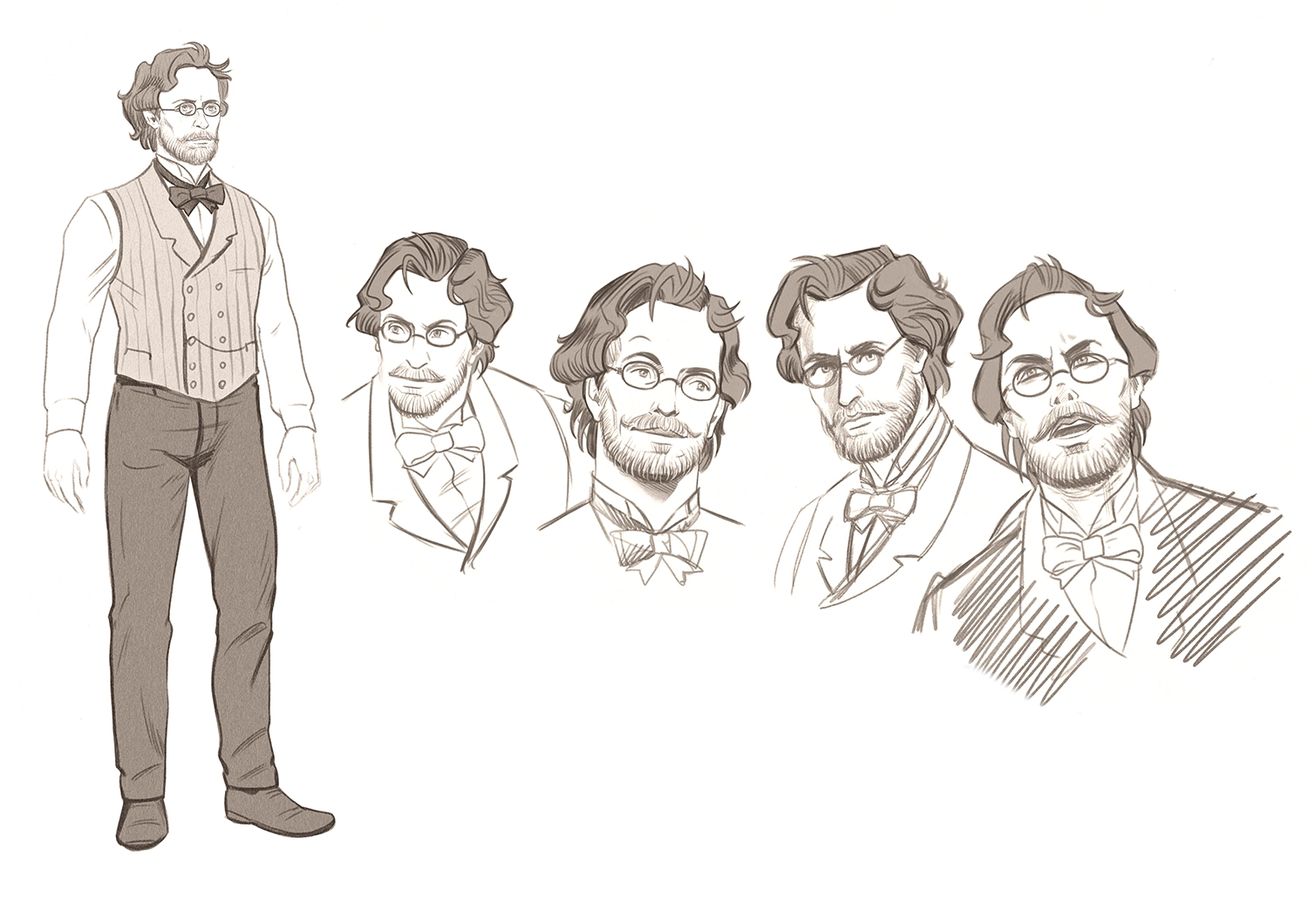
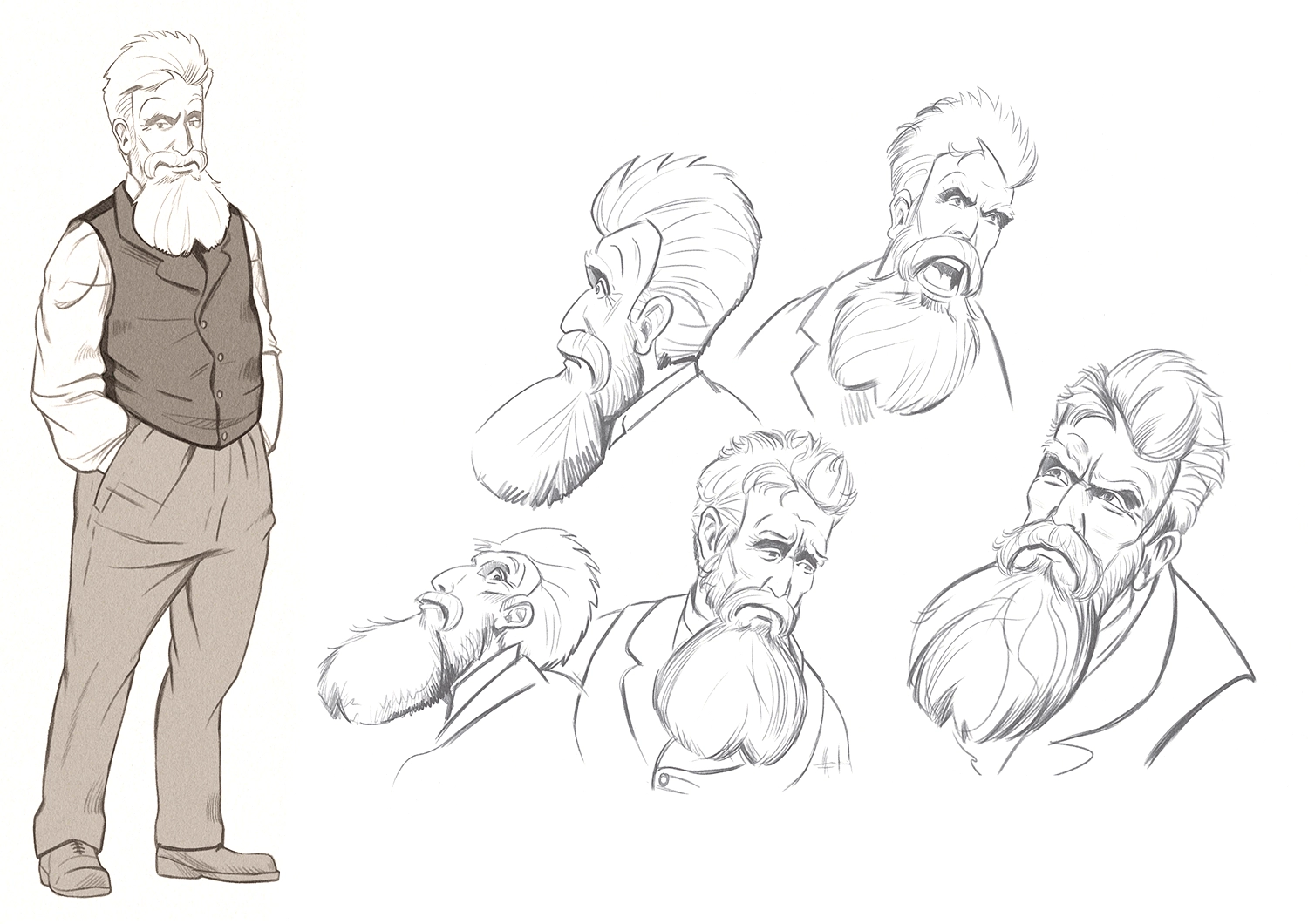
Charles Robinson has moved to Kansas with his wife to help create a free state. While others might view him as a pacifist, his beliefs are more pragmatic. While he is a moral fighter for abolition, he is trying to make amends for a past incident in California where he killed a man. He believes that violence will only lead to more violence, which could cause the public to lose support for his anti-slavery cause. As his beliefs are tested, he must ultimately decide if fighting for a free state is worth sacrificing his peaceful principles.
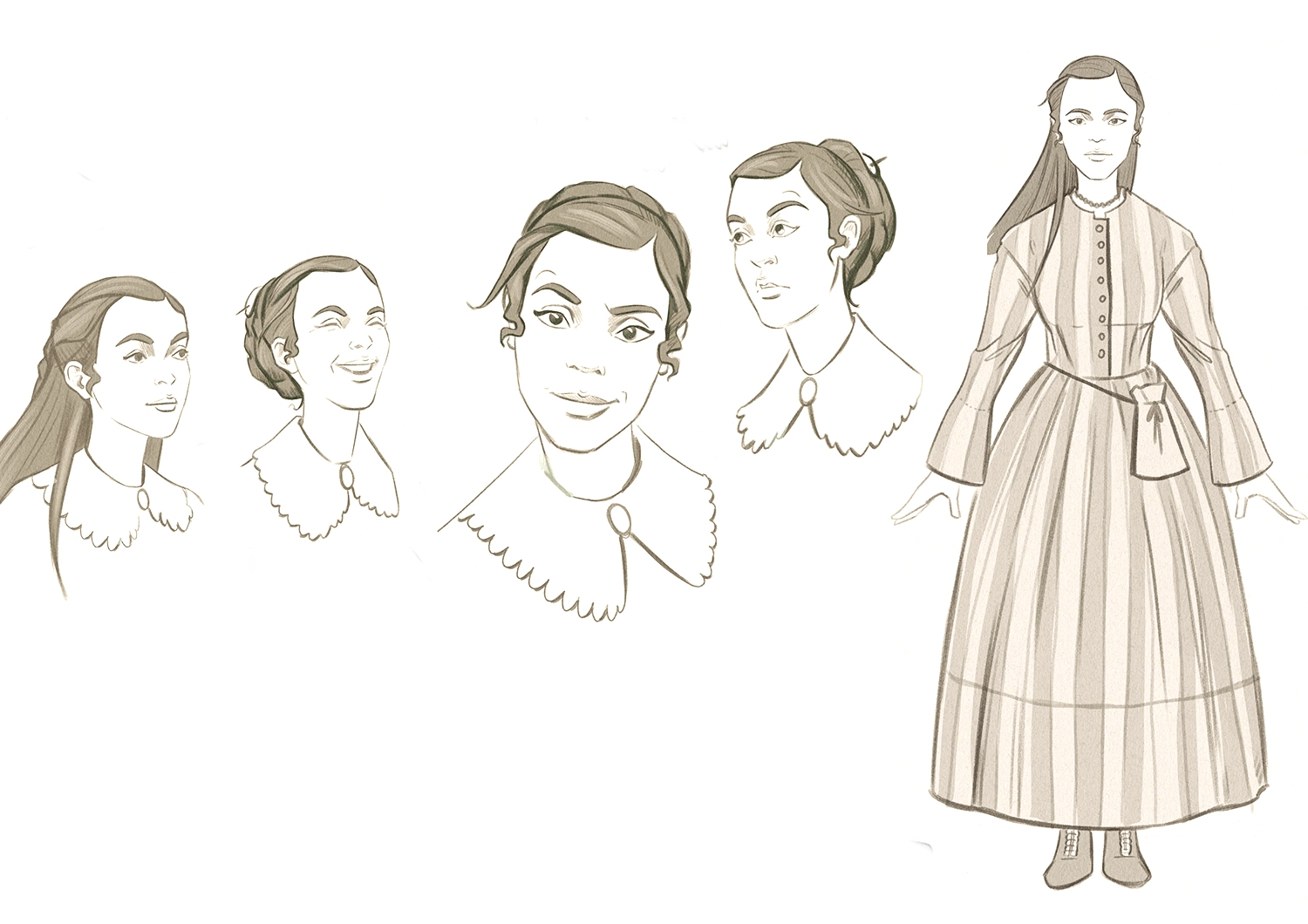
Sara Robinson is the sharpest mind in the room and the first to say so. While her husband navigates the politics of building a free state, Sara is writing the memoir that will outlast all of it, a firsthand account of tyranny that will become one of the era's most important abolitionist texts. As the Free-state cause fractures under pressure, Sara is the one who sees each crisis with clear eyes and makes the hardest calls. She is not just a witness to history. She is its conscience.
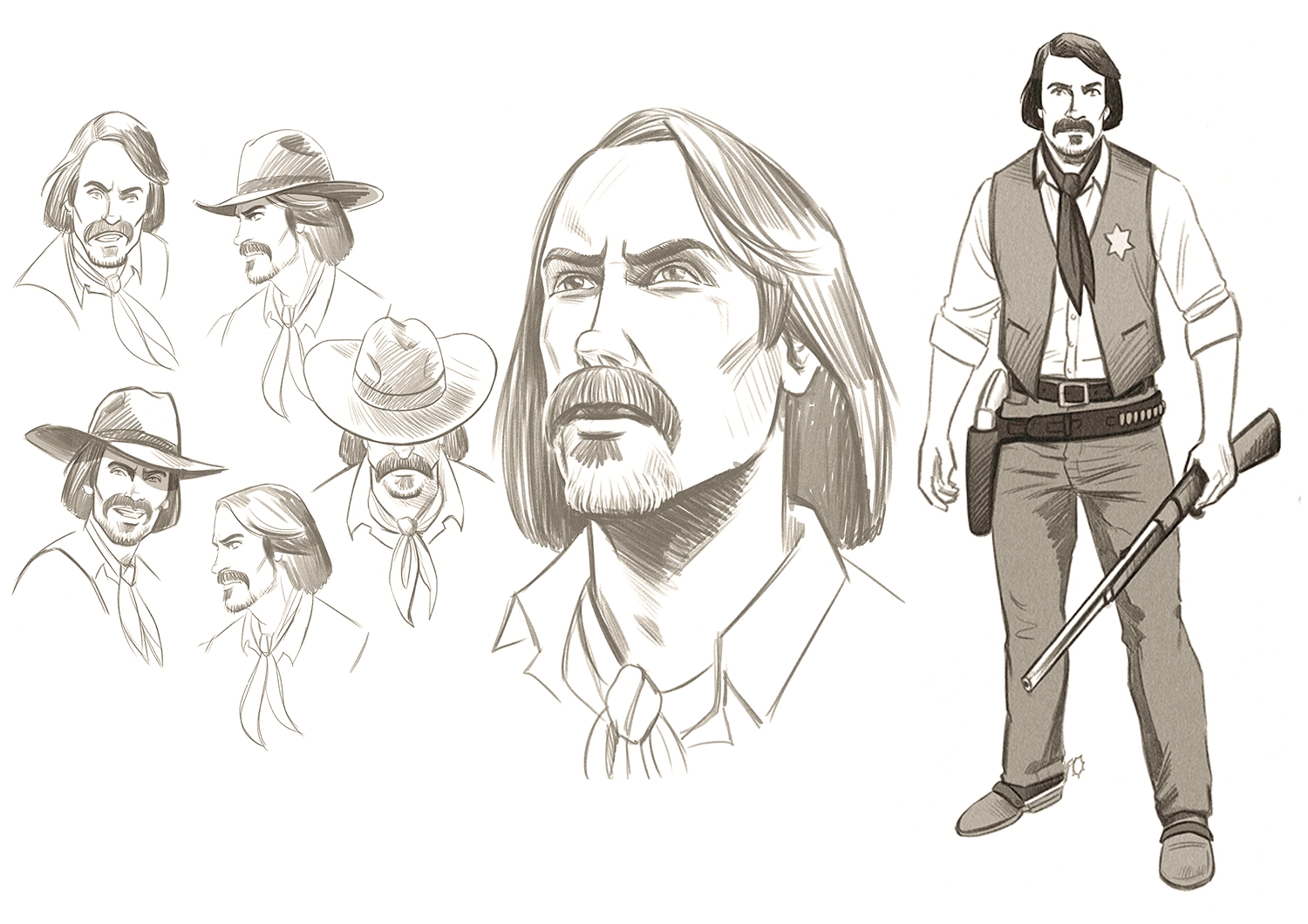
Samuel Jones is ambitious and prideful. He is a devoted husband, father, and lawman with a rigid adherence to his own sense of order. If he plays by his society’s rules and does everything right, he will eventually be rewarded. He will have to decide what kind of lawman he want to be. Is the law an ideal to strive towards, or a non-negotiable tool to enforce power, and what are the personal consequences of making that decision?
John Brown is a deeply religious family man who believes his fight against slavery is a holy mission. He is a strong and decisive leader, but rigid and uncompromising. He has personally seen how slaves are treated. He views the institution of slavery as a sin against God and sees violence to stop it as not only just, but necessary. He is a man whose divine mission to end slavery will be tested against his love for his family, forcing him to choose which he is ultimately willing to sacrifice.
Justin Ogleby is a lifelong resident of Kansas with a love of stories, art, and film. After earning a BFA in graphic design, he discovered that storytelling is the foundation of all effective communication. He is currently using those skills marketing healthcare services for under-served communities. In his free time, he writes, creates, and helps promote his flyover community.
Italian artist Alessandra Imperio holds a degree in Illustration and Animation from IED Milan. She has experience in illustration, storyboarding, and comics. Prior to her work on Bleeding Kansas, she illustrated the graphic novel Khor’s Land, published by Caliber Press in the United States, and also released in Italy and Poland. She also penciled The Republic, a graphic novel published in the United States through a crowdfunding campaign.